Last updated: December 2025
New to Cornhole or just bought your first board? Then this is your complete Cornhole beginner’s guide. We explain step by step how the game works, which rules you really need to know, what equipment you need, and how to get better quickly – without making it complicated.
This guide is ideal for:
- families looking for a fun outdoor game
- camping and backyard players
- corporate events, parties and clubs
- players who might want to play tournaments later
Want to go more in-depth after this guide? Then also check the Cornhole hub page with links to rules, distances, technique, strategy and tournaments.
What is Cornhole?
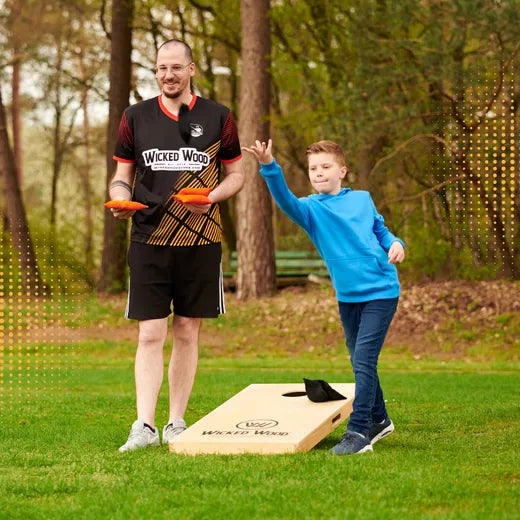
Cornhole is a throwing game where you throw fabric bags towards an angled wooden board with a hole. You score points if the bag stays on the board or falls into the hole.
- You play 1 vs 1 or 2 vs 2
- Each team has 4 bags in one color
- You take turns throwing until all 8 bags have been thrown (this is called a frame)
- After each frame the points are compared and the difference is added to the score
Cornhole is so popular because it is very easy to learn, yet surprisingly tactical and addictive. Ideal for the backyard, campsite, beach, festivals, and corporate events.
Want a broader explanation? Read: What is Cornhole?
Basic Cornhole rules (simply explained)
You can find the full official rules on the Cornhole rules page, but as a beginner this is enough to get started:
1. Objective of the game
The objective is to be the first to reach 21 points.
2. Scoring
- Bag on the board (stays on): 1 point
- Bag in the hole: 3 points
- Bag that hits the ground first and then lands on the board: 0 points (is removed)
After each round:
- Count Team A’s points
- Count Team B’s points
- Subtract the lower score from the higher score
- The difference goes to the team with the higher score
Example: You score 7 points, your opponent 4 → you add 3 points to your total.
3. Who throws when?
- Teams throw alternately (A, B, A, B, …)
- The team that won the previous frame starts the next frame
Want all the details? Check the complete Cornhole rules & scoring.
Cornhole distances for beginners
Officially, the distance between the fronts of the boards is 8.23 meters. That’s the standard at tournaments and for adults.
For beginners and children you can make it easier:
- Children: 4–5 meters
- Mixed / family: 5–7 meters
- Official: 8.23 meters (27 ft)
Start shorter, and gradually move the boards further apart as everyone improves.
You can find all details about distances, board sizes and bags in the Cornhole distances & sizes guide.
What Cornhole equipment do you need?
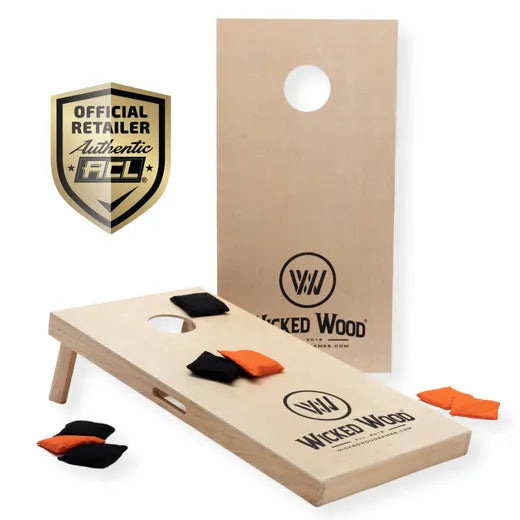
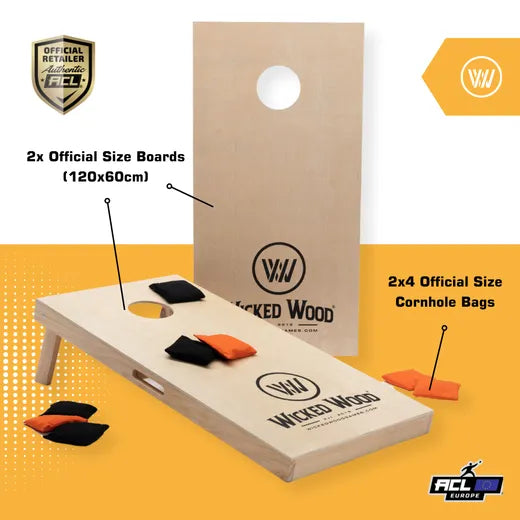
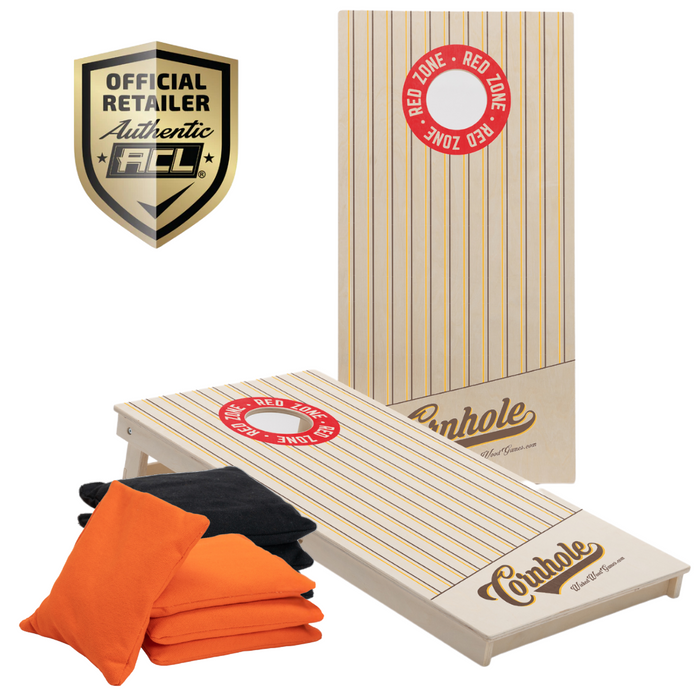
1. Boards
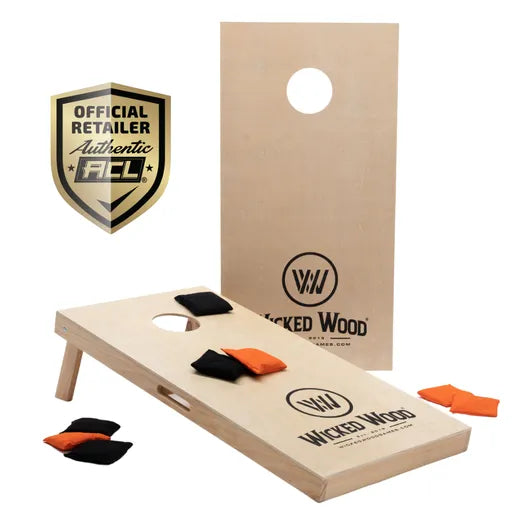
You can play Cornhole almost anywhere, as long as you have two sturdy boards. Pay attention to:
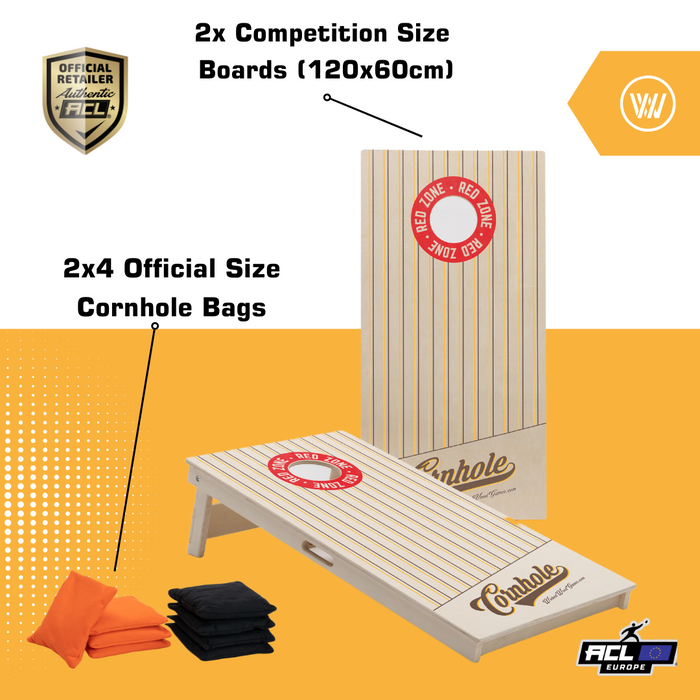
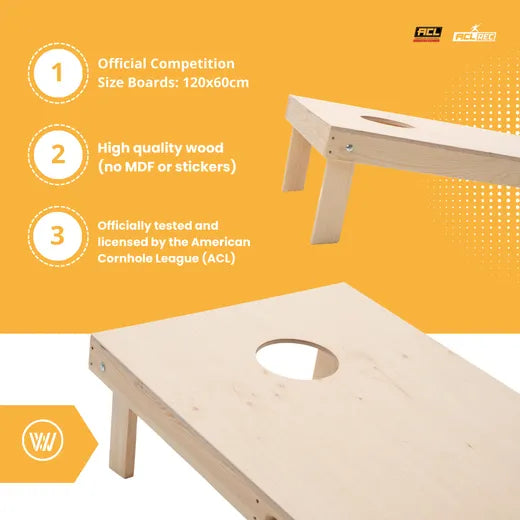
- Size: ideally about 120 × 60 cm (official size)
- Angled position, not wobbly
- Smooth playing surface so bags can slide
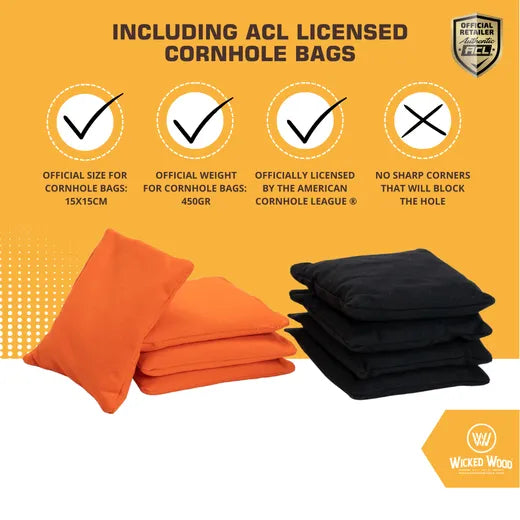
2. Bags
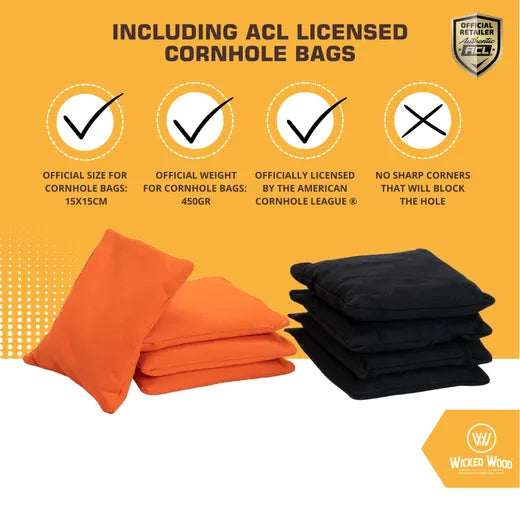
A good Cornhole set has:
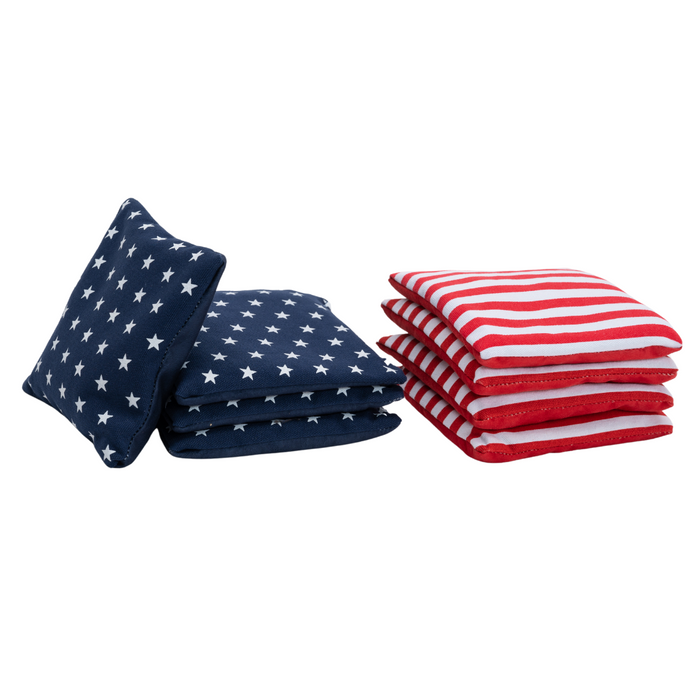
- 8 bags (2 colors, 4 per team)
- Weight about 400–450 grams
- Filling of corn or plastic granulate
Want to get it right straight away? Then check:
Step by step: how to play your first game of Cornhole
-
Set up the boards
- Place the two boards opposite each other at 4–7 meters (for beginners)
- Later you can move up to the official Cornhole distance
-
Make teams
- 1 vs 1: you throw towards the board on the opposite side
- 2 vs 2: each team has one player at each board
- Choose who starts (e.g. with a coin flip or a practice throw)
-
Throw alternately
- Player A throws 1 bag
- Player B throws 1 bag
- Repeat until all 8 bags are thrown
-
Count the points
- Bag on the board = 1 point, in the hole = 3 points
- Calculate the difference and give that to the winning team
- Keep playing until 21 points
That’s all you need to get started. After that you can gradually add the official rules and strategies.
Basic technique for beginners
You don’t need a pro throw to have fun, but a few simple tips help a lot:
1. Stance
- Stand next to the board, feet shoulder-width apart
- Place one foot slightly forward as your “throwing leg”
- Stay relaxed; don’t tense your shoulders
2. Grip on the bag
- Hold the bag like a soft block, don’t squeeze too tightly
- Try to have the bag rotate as flat as possible in the air
3. Throwing motion
- Underhand throw, like a bowling throw
- Smooth swing, without jerking
- Release the bag at the same point of your swing each time
Want to work on this further? Read the Cornhole technique guide.
Simple strategy for beginners
You don’t have to play like a pro right away, but this basic strategy will help you score better immediately:
- Aim for the board first – better a sure 1 point than a miss next to the board
- Don’t throw too hard – softer throws are more likely to stay on
- Watch the score – if you’re ahead, play safer; if you’re behind, take a bit more risk
- Stay calm after a miss – one bad throw doesn’t mean the frame is lost
Later you can learn advanced strategies such as block shots, push shots and airmails. You’ll find those in the Cornhole strategy guide.
Common beginner mistakes
- Throwing too hard – bags bounce and slide off the board
- Doing every throw differently – changing stance and release leads to unpredictable results
- Not keeping track of the score – then you can’t make smart decisions
- Starting too far away – start closer and move the boards later
- Boards that are too cheap – wobbly or overly slick boards make the game frustrating
Simple practice drills for quick improvement
1. “10-throw challenge”
Take 10 throws and keep score:
- Count how many bags hit the board
- Count how many bags go in the hole
Do this every time you play and try to beat your own record.
2. Aim points on the board
Pick a small spot on the board (e.g. in front of the hole) and try to land your bag there. This helps you aim more precisely.
3. Practice together
Play frames with friends or family. Together you’ll improve faster and keep it fun.
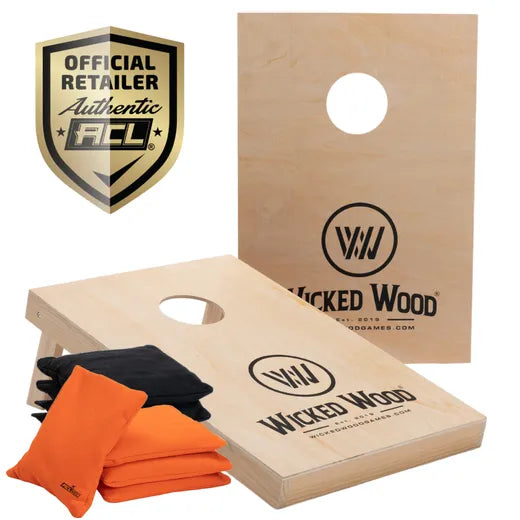
Which Cornhole set is suitable for beginners?
As a beginner you don’t need an extremely expensive pro set, but you do need equipment that plays well and lasts long.
Pay attention when choosing a set:
- Board size: preferably 120 × 60 cm (official), 90 × 60 cm can be fine for children
- Sturdy wood, no wobbly legs
- Complete set with 8 bags included
See our sets for beginners and advanced players here:
Next step after this beginner’s guide
Played a few games and starting to feel comfortable? Then you can gradually build up your game:
- Cornhole technique – better throws, more control
- Cornhole strategy – play smarter and win more often
- Cornhole tournaments – how tournaments work and how to join
- Cornhole bags guide – choose bags that match your level
FAQ – Cornhole for beginners
1. Is Cornhole difficult to learn?
No. The basics are very simple: throw bags at a board and count points. Within a few minutes everyone can join in. Later you can keep improving your technique and strategy.
2. How far apart should the Cornhole boards be?
Officially 8.23 meters, but for beginners and children 4–7 meters is fine. All details are in the Cornhole distance & sizes guide.
3. How many bags do you need for Cornhole?
You play with a total of 8 bags: 4 per team in their own color. A good Cornhole set is supplied with 8 bags as standard.
4. Up to how many points do you play Cornhole?
Usually you play to 21 points. Agree beforehand whether you must hit exactly 21, or whether “21 or more” also counts. You can also find this in the Cornhole rules.
5. Can I play Cornhole indoors and outdoors?
Yes. Outdoors in the backyard, at the campsite or at a festival is most popular, but you can also play indoors if you have enough space and a flat surface.
6. What equipment do you recommend for beginners?
A sturdy wooden set with boards in official size (or slightly smaller for children) and 8 good bags. Check our Cornhole sets for starters.