Introduction: game or sport?
Many people get to know cornhole as a fun little game in the garden, at the campsite or at a barbecue. But anyone who has seen a tournament or professional match will quickly notice: this is more than just tossing some bags. Is cornhole a sport? In this guide we explain why the answer is a resounding yes – without it losing its low-threshold character.
Cornhole as a relaxed outdoor game
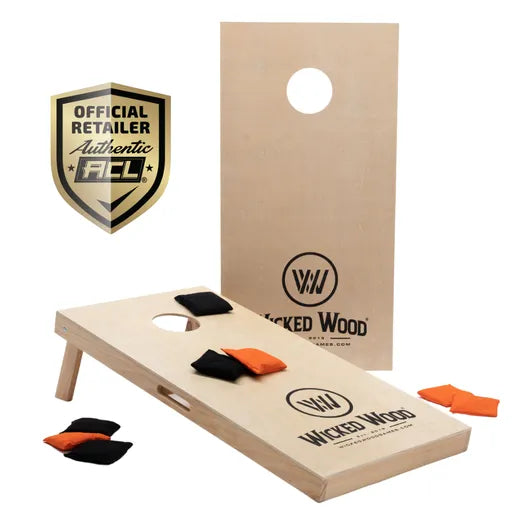
For many players, cornhole starts as a simple outdoor game:
- You set up a set of boards in the garden or at the campsite;
- Everyone takes turns throwing a few bags;
- The atmosphere is relaxed and the scoring is sometimes a bit loose.
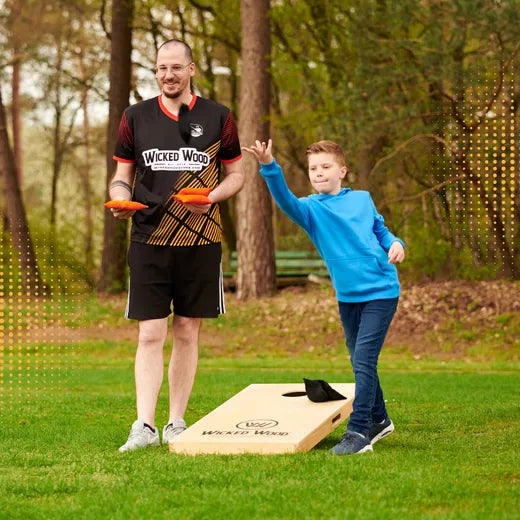
Nothing wrong with that: in this form, cornhole is an ideal game for family, children and parties. Precisely because the basic rules are so simple, almost everyone can join in after a short explanation.
What makes something a sport?
To determine whether cornhole is a sport, you can look at a few general characteristics:
- There are clear rules and a defined playing area;
- Technique and skill make a big difference in performance;
- There are organized competitions and tournaments;
- Players can train and improve;
- There is a form of physical and mental challenge.
Cornhole meets all these points, especially in its competitive form.
Official cornhole rules and standards
Modern cornhole organizations work with official rules for:
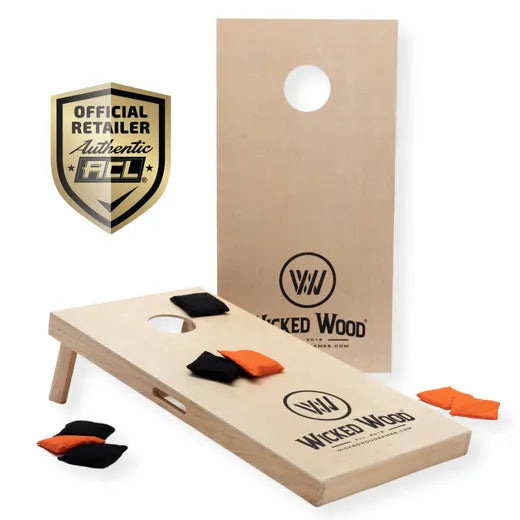
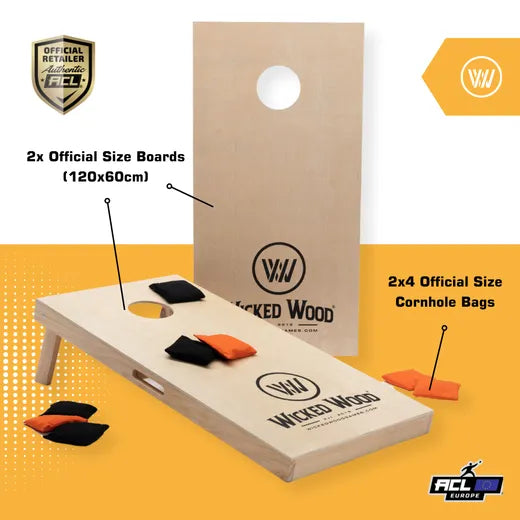
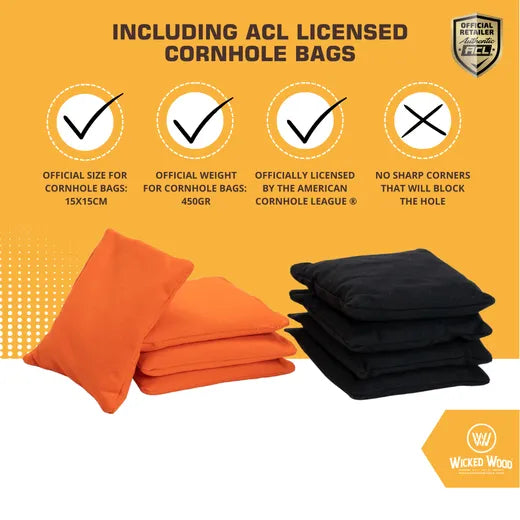
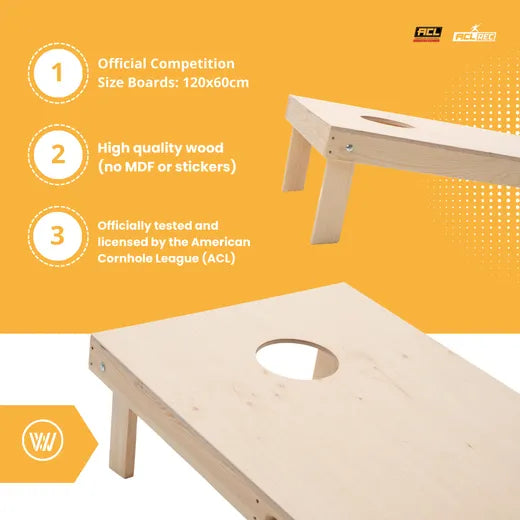
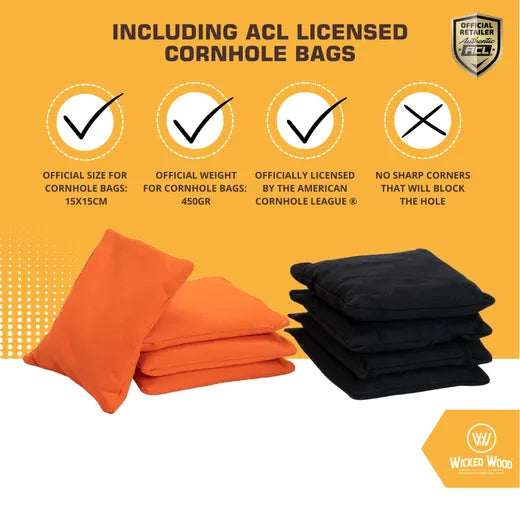
- Dimensions and materials of boards and bags;
- The exact distance between the boards;
- Scoring according to cancellation scoring;
- Rule violations (fouls), for example foot faults;
- Tournament formats and time limits.
These rules ensure that matches can be played in the same way all over the world. This allows you to compare scores and performances fairly, just like in other sports.
On our page Official cornhole rules & scoring you will find an extensive explanation of all the rules. Or visit our Cornhole Hub
Skill, technique and strategy
At first glance, cornhole seems simple: you throw a bag at a board. But those who play more often will notice that technique and strategy make a big difference.
Technical aspects
- Developing a consistent throwing motion;
- Controlling the rotation of the bag;
- Choosing the right power and arc;
- Working with different speeds of bags and boards.
Strategic choices
- Do you go for the safe shot on the board or for an aggressive airmail?
- Do you place a blocker to hinder your opponent?
- Do you use a push shot to push your own bags into the hole?
This combination of technique, precision and tactics makes cornhole comparable to other precision sports such as darts, archery or billiards.
Competitions, leagues and tournaments
Cornhole clubs, leagues and tournaments are popping up all over the world. There are:
- local evenings in bars and sports canteens;
- regional and national tournaments;
- international events and rankings.
In some countries there are even professional players who train full-time and take part in major tournaments. Matches are broadcast, there are sponsors and prize money – all characteristics that you also see in other sports.
Accessible and competitive
What makes cornhole unique is the combination of accessibility and depth:
- Accessible: anyone can join in within a few minutes.
- Depth: if you want, you can train seriously, improve and play tournaments.
This makes cornhole both a perfect family game and a serious sport. You choose the level at which you want to play it.
Is cornhole a sport? The conclusion
If you look at the official rules, the fixed dimensions, the importance of technique, the competitive scene and the training opportunities, the answer is clear: cornhole is a sport. At the same time, it remains a low-threshold game that you can play in the garden without any experience.
Curious how to take your game to the next level? Then also take a look at:
Frequently asked questions: is cornhole a sport?
Is cornhole officially recognized as a sport?
Yes, cornhole is seen as a real sport in many countries, with official rules, rankings, tournaments and professional players. At the same time, it remains accessible as a recreational game.
Is cornhole physically demanding?
Cornhole is physically less demanding than many other sports. It mainly requires coordination, balance and repeated, controlled movements. This makes it suitable for a broad audience, including children and seniors.
Can I train to get better at cornhole?
Absolutely. Many players practice specifically on throwing technique, consistent release, distance control and mental focus. By training regularly you will quickly notice improvements in accuracy and scores.
Do I need professional equipment to play cornhole as a sport?
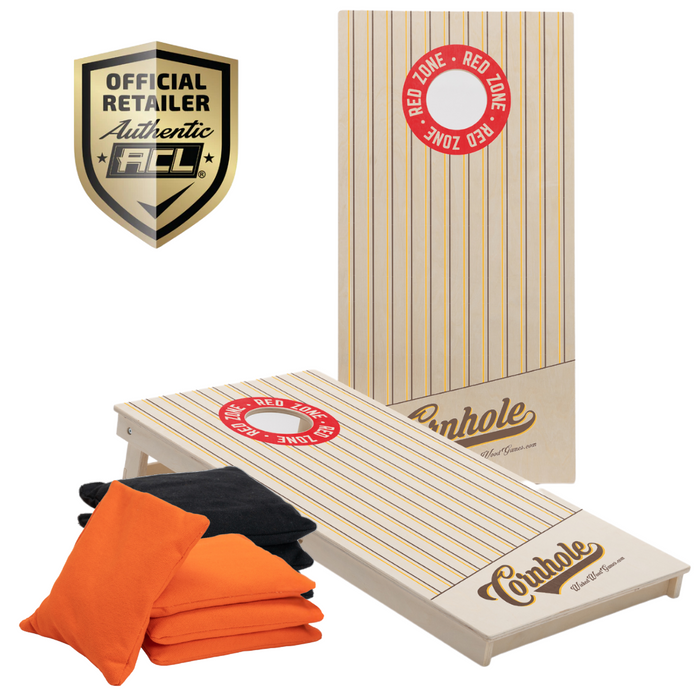
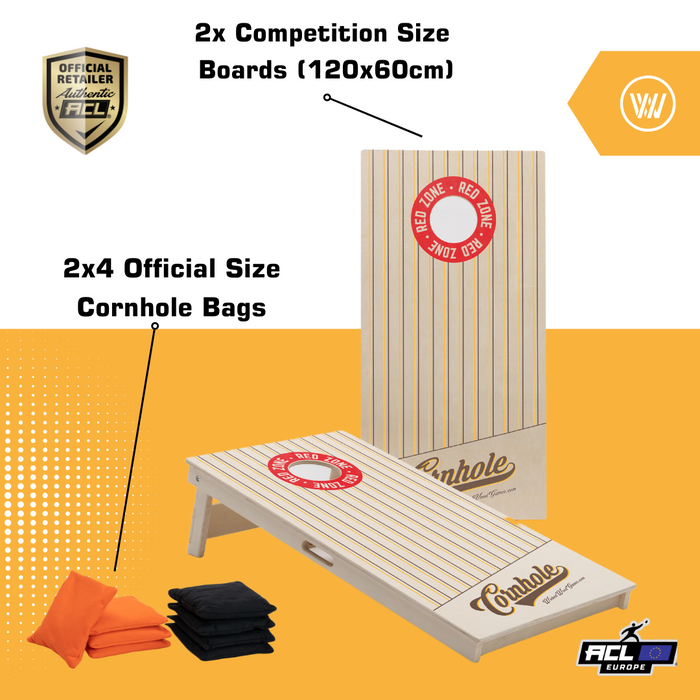
For recreational play, a basic set is sufficient. If you want to move more towards a competitive level, it is advisable to play with boards and bags with official dimensions and high-quality materials, such as you can find in our cornhole sets.
Is cornhole suitable as a team sport?
Yes, especially in doubles or team formats, cornhole is a real team sport. You work together with a partner, coordinate strategy and motivate each other, just like in other team sports.