Last update: December 2025
Cornhole has grown from a cozy garden game into a serious competitive sport with official leagues, rankings, and major international tournaments. Whether you want to organize a company outing, club day, or official Cornhole tournament, or take part in serious competitions yourself – on this page you’ll find everything you need.
On this page you’ll discover, among other things:
- Which tournament formats exist (single, double elimination, pools, ladder)
- Which official Cornhole rules apply at tournaments
- How scoring and points work in competitive matches
- How to organize a Cornhole tournament yourself
- What ACL Europe is and how their tournaments work
- Which boards and bags are suitable for tournament play
- Strategy and training tips for those who want to win more often
Want to learn the basics first? Also check out the Cornhole guide & hub page or dive into the Cornhole rules and official Cornhole distances.
Official Cornhole tournament rules & standards
Most competitive Cornhole tournaments in Europe follow the standards of the American Cornhole League (ACL) and ACL Europe. This makes matches fair and comparable everywhere.
Board setup
- Distance between the fronts of the boards: 8.23 meters (27 ft)
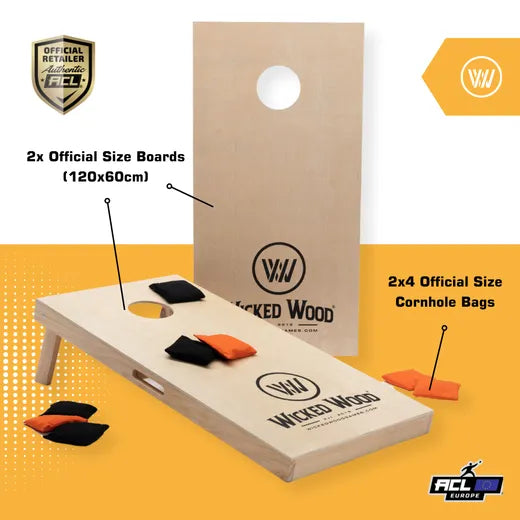
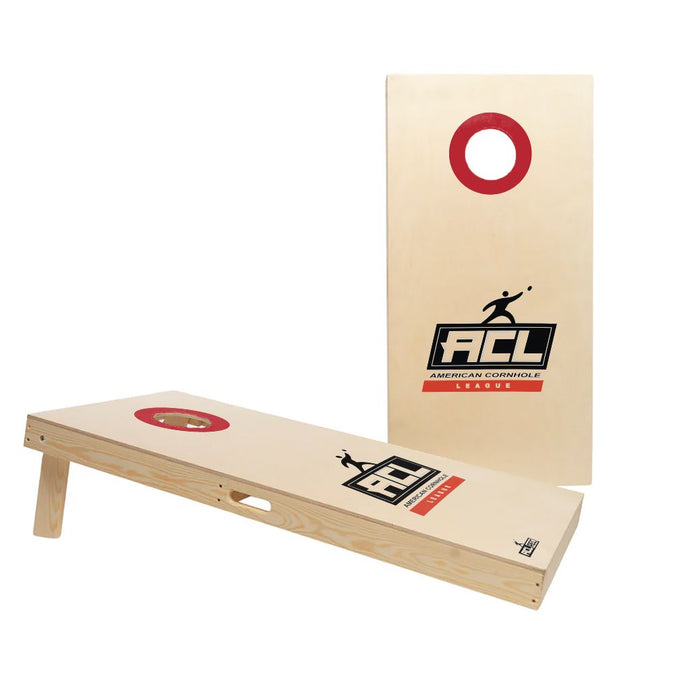
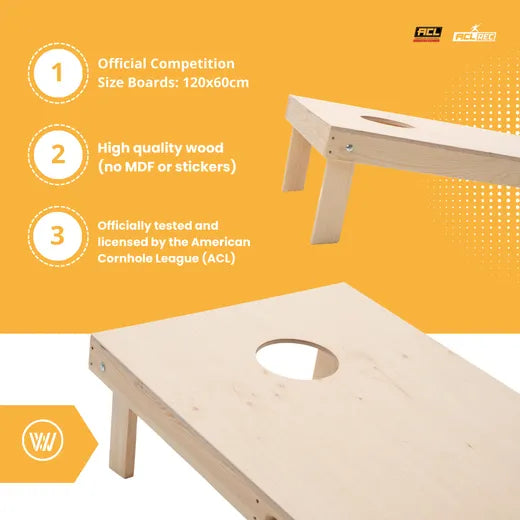
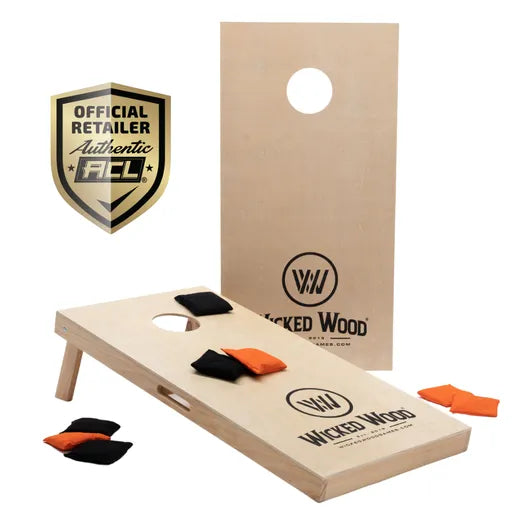
- Board size: approx. 121.9 cm long x 60.9 cm wide. (official Cornhole board)
- Hole diameter: approx. 15.2 cm, centered in the width
Cornhole bags
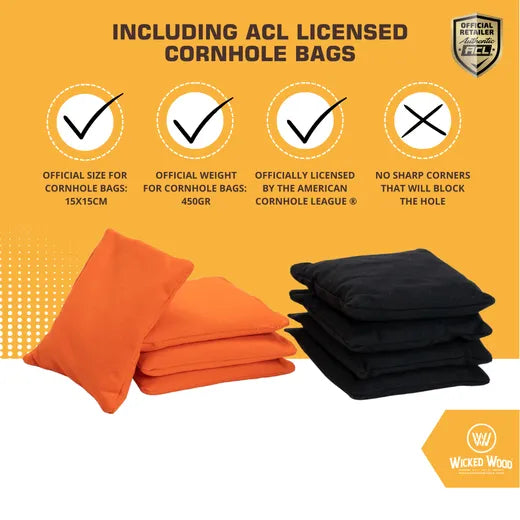
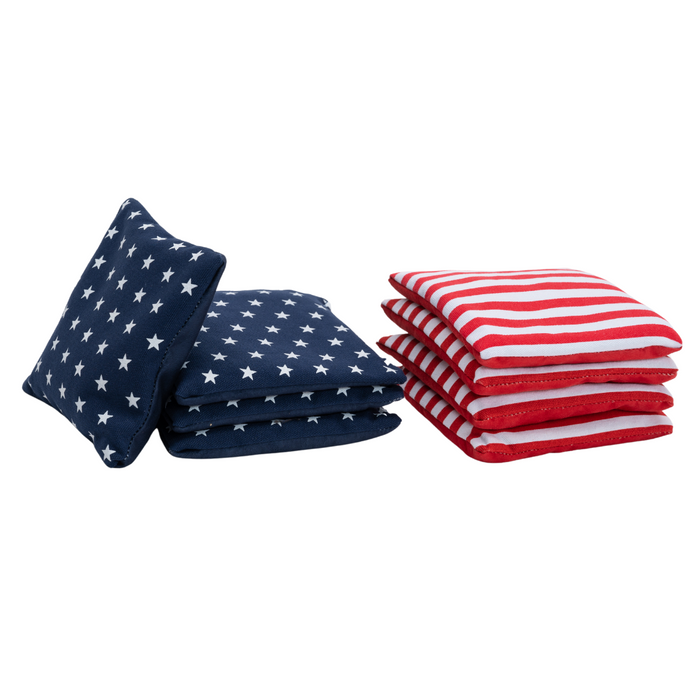
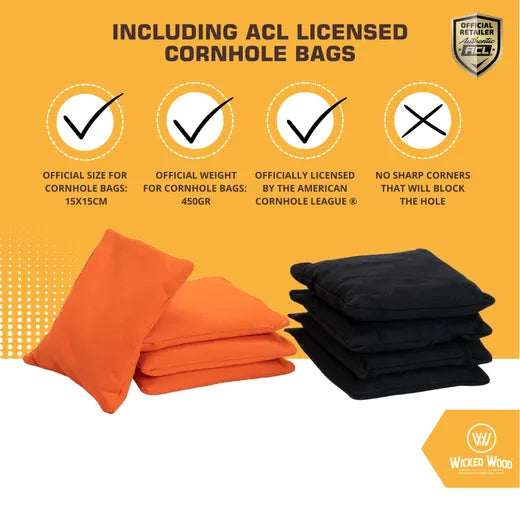
- Weight: approx. 400–450 grams per bag
- Size: approx. 15 × 15 cm (6 × 6 inch)
- Filling: corn or plastic granulate (resin), for consistent performance
- Ideal: double-sided – one fast (slick) side and one slow (sticky) side
Looking for equipment that’s ready for tournament play? Check out our Cornhole sets and professional Cornhole bags.
Scoring (cancellation scoring)
In tournaments, cancellation scoring is almost always used:
- Bag on the board: 1 point (if it stays on after all throws)
- Bag in the hole: 3 points
- Does a bag hit the ground first and then the board? → 0 points (it is removed)
- After each turn the points of both players/teams are compared; only the point difference is added
- Goal: usually play goes to 21 points
You can find a detailed explanation on the Cornhole rules & scoring page.
Popular Cornhole tournament formats
Depending on the number of participants and the time available, you can choose from various formats:
1. Pools (round-robin)
Teams or players are divided into pools and play against everyone in their pool. Ideal if you want everyone to play multiple matches.
2. Single elimination
If you lose a match, you’re out of the tournament. This is the fastest format, useful when time is limited.
3. Double elimination (most used)
Everyone may lose once. After the first loss you go to the “losers bracket”. Only after your second loss are you out. This is a very popular format for serious Cornhole tournaments.
4. Pools + knock-out
First pools to determine seeding, then a single or double elimination knock-out phase with the best teams.
5. Ladder or ranking system
For clubs and regular game nights: players move up or down based on wins and losses. Ideal for ongoing internal competitions.
Tip: For 8–24 teams a double elimination tournament is usually the best balance between playing time and fairness.
Organizing a Cornhole tournament yourself
1. Choose your format and target group
First decide who the tournament is for:
- Company tournament / team outing
- Sports club or association
- Open tournament for everyone
- Serious competition with ranking
2. Set the rules
Clearly agree in advance:
- Up to how many points you play (e.g. to 21)
- Whether “exact 21” applies or “21 or more”
- Which Cornhole rules are followed
- Which bags and boards are allowed
3. Create a schedule & bracket
Use an online bracket generator or a simple schedule in Excel or on paper. Make sure players can easily see when and against whom they play.
4. Ensure enough space
- Official distance between the boards: 8.23 meters
- Leave at least 2 meters of walking and throwing space behind each board
- Avoid crossing walking routes behind the boards
5. Use quality equipment
If the boards wobble or the bags differ per lane, the tournament will never be truly fair. Therefore use:
- Wooden boards in official size
- Well-finished surfaces (for predictable sliding)
- Identical sets of Cornhole bags per lane
6. Referees or scorekeepers
At larger or more serious tournaments, it’s useful to have someone per lane responsible for:
- Keeping score
- Checking for foot faults
- Resolving disputes or doubtful situations
Official ACL Europe tournaments
For players who want to go a step beyond local tournaments, there is ACL Europe – the European branch of the American Cornhole League. Here, official ACL Europe Series events and major international opens are organized, with players from all over Europe (and beyond) taking part.
What can you expect at ACL Europe tournaments?
- Official ACL standards for boards, bags, and distances
- Different levels: from recreational players to top Pro players
- A European ranking and the chance at ACL Europe Pro status for the best players
- Major events such as the ACL Europe Open, where players from many different countries come together
Want to join an official ACL Europe tournament? Then you can:
- register via the official ACL Europe channels
- follow their tournament calendar for new events in Europe
- train with official Cornhole sets and ACL-style bags so you’re used to the playing conditions
Through the Cornhole community and news posts on our site you’ll stay up to date on important ACL Europe tournaments and results.
Tournament etiquette & fair play
- Always respect your opponent – even when there’s a big difference in level
- Don’t create distractions during the other player’s throw
- Stay behind the foul line until your bag has landed
- Shake hands (or high five) before and after the match
- Accept decisions from referees or organizers
Equipment for tournament-ready Cornhole
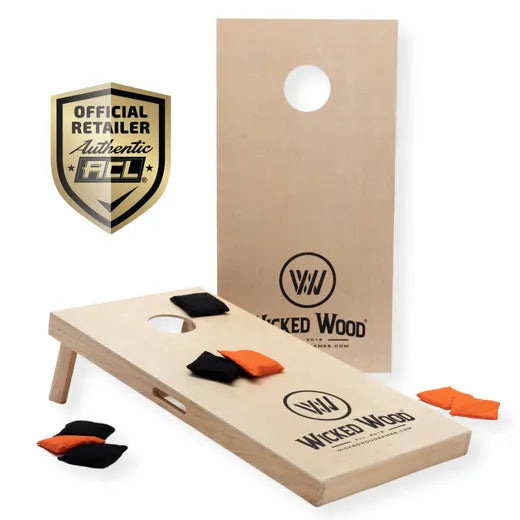
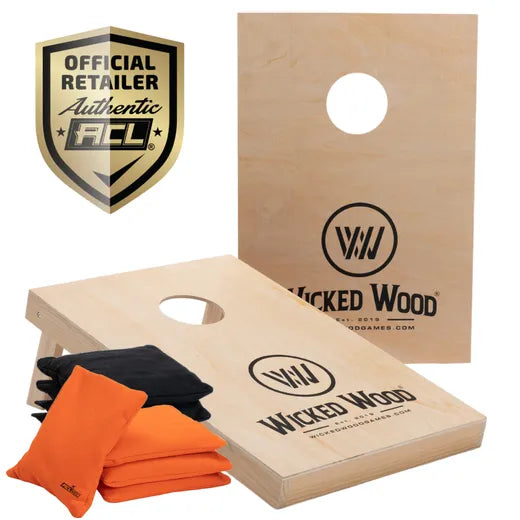
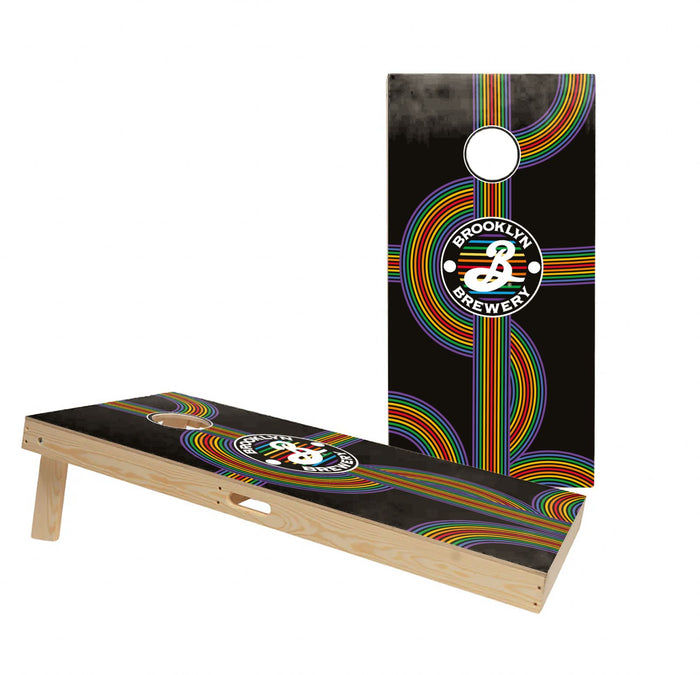
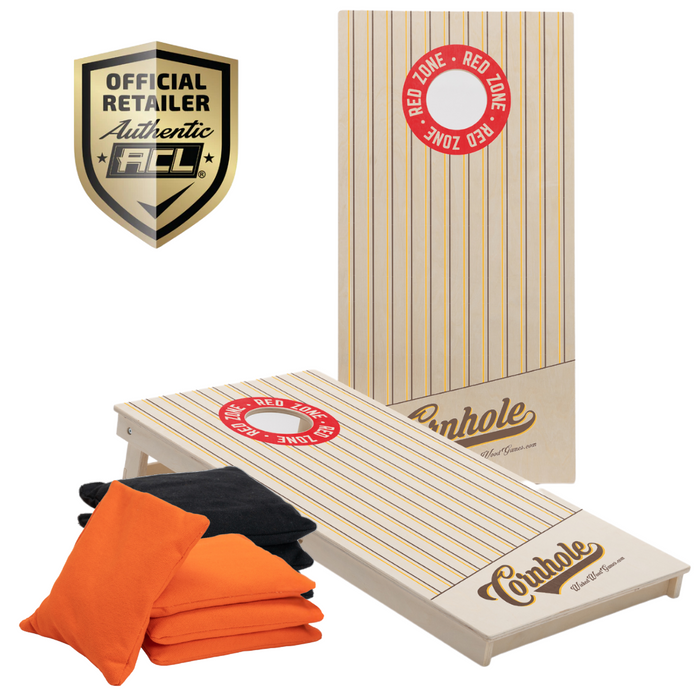
Cornhole boards
For tournament play you want boards that:
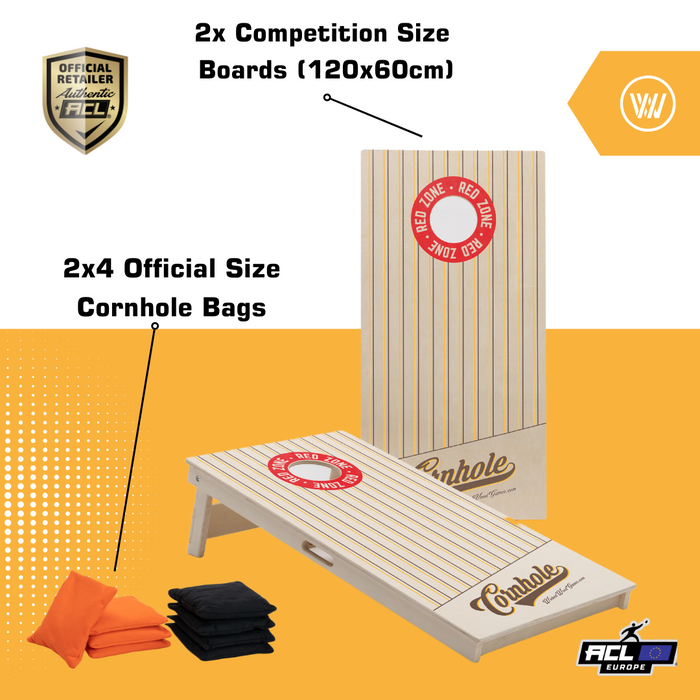
- have the official size (approx. 120 × 60 cm)
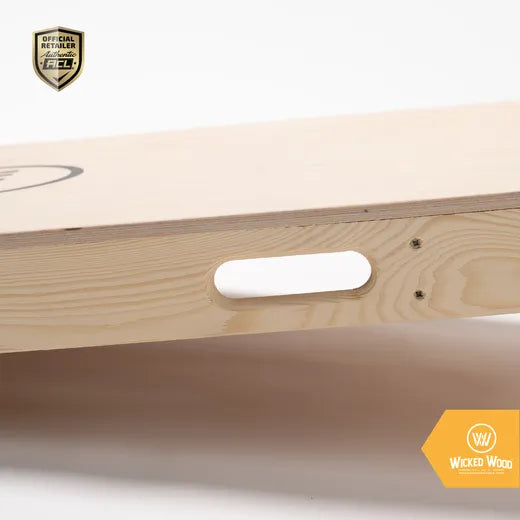
- have a stable, sturdy construction
- offer a smooth but not too fast playing surface
Professional Cornhole bags
Serious players choose:
- double-sided bags (one fast, one slow side)
- resin filling for consistent shape and weight
- a weight around 450 grams
Discover our range:
Strategy for Cornhole tournaments
In tournaments it’s not only about technique, but also about smart decisions:
- Ahead? Play more defensively with block shots and safe 1-pointers.
- Behind? Take more risks with airmails and aggressive push shots.
- Board control: determine where the battle takes place by blocking and sliding smartly.
- Shot selection: not every throw has to aim for the hole – sometimes blocking is smarter.
Want to dive deeper into this? Read the Cornhole strategy guide.
Training for Cornhole tournaments
1. Consistency drills
Practice the same throw over and over, with the same stance and release. Consistency is the foundation of competitive success.
2. Shot-specific training
- Practice blocks to close off your opponent’s line
- Push shots to drive clusters toward the hole
- Airmails for high-pressure situations
- Slide control to glide perfectly past existing bags
3. Simulating match pressure
Play with a scoreboard, time pressure, or against stronger players to mimic the feeling of a real tournament.
4. Fine-tuning technique
Work on your stance, grip, throwing motion, and release. See the Cornhole technique page for a detailed explanation.
FAQ – Cornhole tournaments
1. What is the official Cornhole distance at tournaments?
The official Cornhole distance is 8.23 meters between the fronts of the boards. Players stand next to their own board and throw toward the opponent’s board.
2. Which scoring system is used in tournaments?
Tournaments almost always use cancellation scoring: 1 point on the board, 3 points in the hole, and only the point difference per frame is added. You can find the details on the Cornhole rules & scoring page.
3. Which bags are allowed at serious tournaments?
These are usually bags with:
- a weight around 400–450 grams
- size approx. 15 × 15 cm
- resin filling for consistency
- double-sided fabrics (slick & sticky)
Check out our professional Cornhole bags for tournament-ready equipment.
4. What is the most commonly used tournament format?
For local and larger tournaments, double elimination is very popular: you’re only out of the tournament after two losses. Everyone plays multiple matches and the schedule remains manageable.
5. What are ACL Europe tournaments?
ACL Europe organizes official Cornhole tournaments and a European tournament series (ACL Europe Series), with players from many different countries taking part. These are events with official rules, rankings, and often a high level – but there are usually also divisions for recreational players.
6. Can I participate in an ACL Europe tournament as a beginner?
Yes, most ACL Europe tournaments have different divisions by level. Beginner players can participate in lower divisions, while advanced players and pros compete in higher classes.
7. Can I organize a Cornhole tournament myself with friends or colleagues?
Absolutely. With a few good boards, enough space, and a simple schedule you can already set up a fun tournament. Preferably use the official Cornhole rules and distances for a real tournament experience.
Download the official American Cornhole League (ACL) Rules